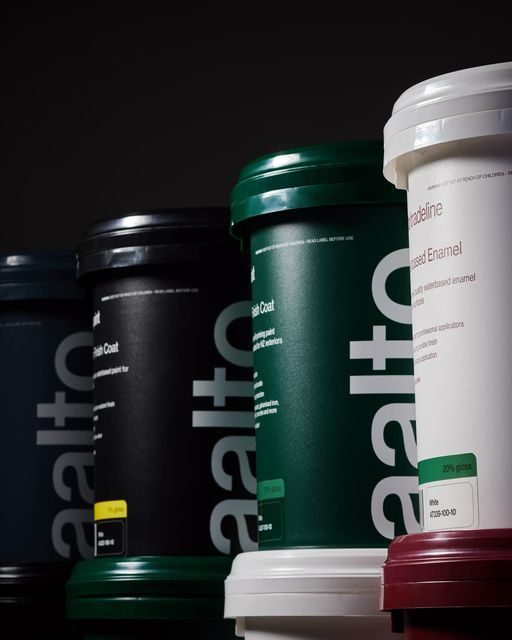
Plastic Paint Packaging
8 April, 2026Plastic Paint Packaging: How to Choose Reliable Containers for Production and Storage
Plastic paint packaging is not just a container for filling; it is an integral part of the production process, logistics, and storage. If the packaging is chosen incorrectly, a business risks issues with airtightness, transportation, product appearance, and warehouse batch stability. That is why paint containers must match not only the volume but also the material type, lid format, transport conditions, and the specifics of the product itself. Plast Mould operates as a plastic packaging manufacturer in Ukraine, and the company's website emphasizes that plastic buckets are specifically used for coatings and construction materials.
Why the Choice of Paint Packaging Affects Product Quality
For paint and varnish products, packaging must perform several functions simultaneously: preserve the contents, withstand transportation, be convenient for filling, and enhance product presentation. Therefore, plastic packaging for coatings must be selected considering strength, airtightness, and product compatibility. On the Plast Mould homepage, it is explicitly stated that every type of container is manufactured with safety, strength, and airtightness requirements in mind, and the range can be adapted by color, material, and size. For companies looking for a paint container manufacturer, this is just as important as the price itself.
Additionally, it should be noted that plastic packaging products must work effectively not only at the point of sale but also within daily production logic. When dealing with industrial mixtures, decorative coatings, or containers for luminescent paints, factors such as a stable lid, secure closing, stacking resistance, and ease of opening for the end user become critical. It is in these details that the real quality of the packaging is revealed.
How to Choose Containers for Paint Storage
The question of how to choose containers for paint storage always begins with an understanding of the product itself: its density, storage conditions, required volume, and logistics. For one business, lightweight packaging is critical; for another, a tamper-evident seal is a priority; and for a third, stability on a pallet is key. That is why there is no universal plastic container "for everything," but there are specific characteristics to check before purchasing. Plast Mould specifically notes that plastic buckets with a tamper-evident seal can be equipped with lids and security systems, and are manufactured in various configurations.
Which Container Characteristics are Important for Paint Manufacturers
For a manufacturer or co-packer, it is not enough to simply choose a container of the required volume. It is vital that the packaging withstands transportation, preserves product properties, and remains user-friendly at all stages — from filling to delivery to the client. Therefore, before purchasing, containers should be evaluated not only by cost but also by practical characteristics that directly affect the stability of the production process.
When choosing plastic packaging for paint, pay attention to the following parameters:
- lid airtightness and sealing density;
- wall and bottom strength during transportation;
- presence of a tamper-evident (control) seal;
- ease of filling and opening;
- material resistance to contact with the contents;
- stacking capability in the warehouse;
- compliance of the container with your product format and logistics.
This approach helps avoid unnecessary losses, simplifies packaging operations, and makes the container a reliable part of the entire production chain. For a B2B client, this means fewer risks and a more predictable production outcome.
Can Paint Be Stored in Plastic Containers?
If answering the question of whether paint can be stored in plastic containers directly, the answer is yes — provided the container matches the intended use, material, and storage conditions. Plast Mould explicitly states that it manufactures polypropylene packaging for food products and household chemicals, and plastic buckets from the manufacturer are used for coatings and construction materials. This means that containers for the chemical industry and technical products are already part of the company's core assortment. For a manufacturer, it is only important not to confuse a standard household container with specialized technical packaging.
Advantages of Plastic Buckets Over Metal Ones
For businesses working with paints, it is important not just "what to pack in" but "why this way." When discussing the advantages of plastic buckets over metal ones, plastic wins in terms of weight, manufacturing flexibility, variety of shapes, and ease of branding.
In the Plast Mould blog regarding packaging comparisons, it is directly noted that metal containers are strong but more expensive and prone to corrosion without additional coating, while plastic packaging offers the business a better balance between functionality, cost, and convenience. Therefore, plastic paint buckets often become a more practical solution for mass filling. For a deeper explanation, it is appropriate to use the comparison of packaging types: strengths and weaknesses.
Buying Paint Containers Wholesale: What is Important Before Ordering
When a company plans to buy paint containers wholesale, it needs not just a supplier, but a partner with predictable production. The Plast Mould website states that the company has been operating since 1992, has 5,000 m² of production capacity, and over 250 partners in Ukraine and abroad. For a B2B client, this is a significant signal: one can rely on serial plastic packaging production, supply stability, and the ability to customize packaging for specific tasks. Therefore, if you need to buy a plastic container for paints or plastic containers for related solutions, it is logical to evaluate not just the product item, but the manufacturer itself.
In summary, paint packaging is not just a box; it is a tool that affects storage, transportation, filling, and product perception. If a business approaches selection systematically, it receives not just a "strong plastic container," but more stable logistics, fewer losses, and a more professional product presentation. That is why for companies looking to buy paint containers wholesale, the best strategy is to work directly with a manufacturer that understands B2B needs and offers solutions for a specific product, rather than just a generic bucket from a warehouse.