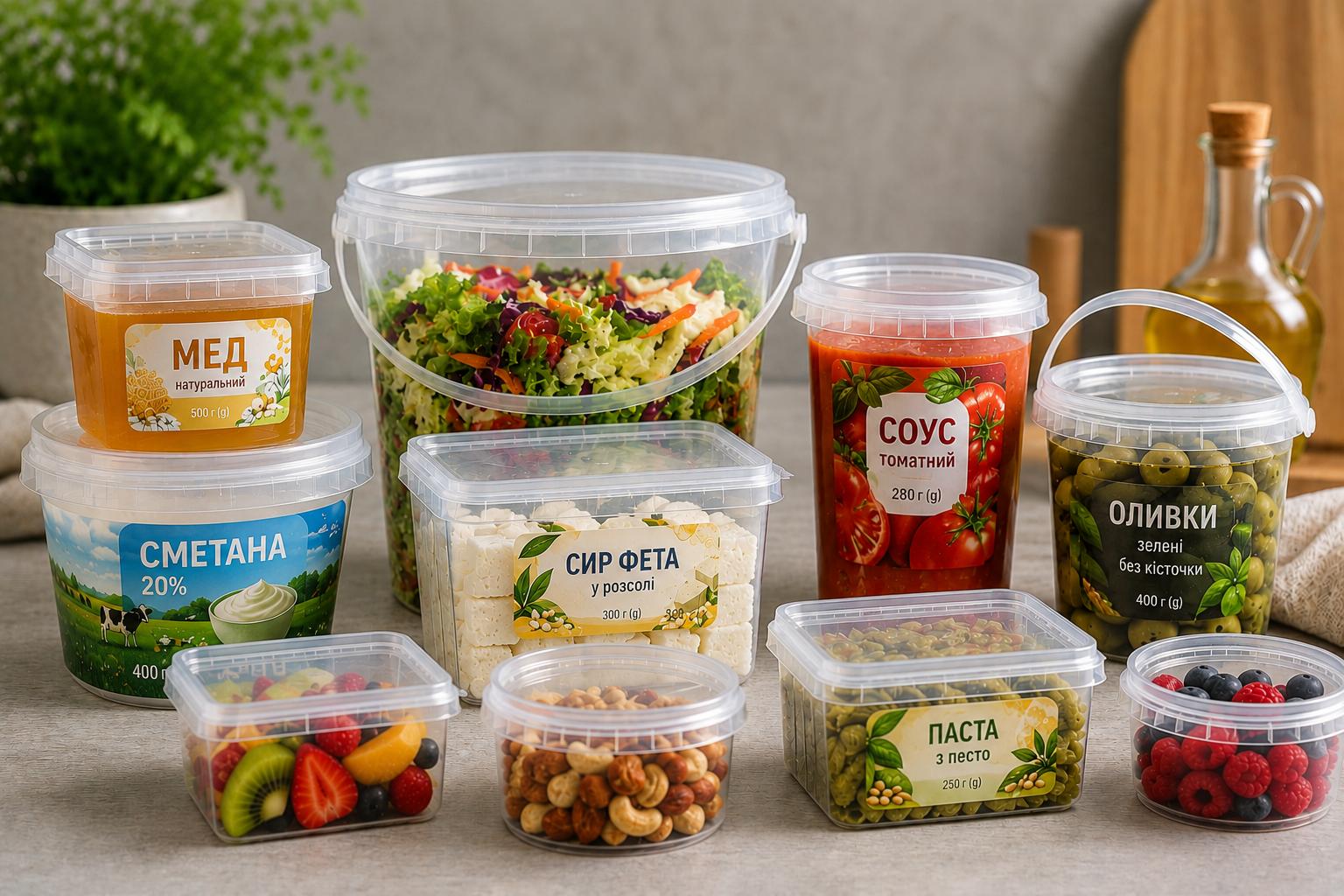
Why Virgin Polypropylene Packaging Is the Optimal Choice for Food Products
18 August, 2026Polypropylene packaging has long been an industry standard for food packaging in the B2B sector. However, not all polypropylene packaging offers the same level of safety and reliability — the raw material from which it is manufactured is a key factor. Virgin polypropylene used by Plast Mould, a plastic packaging manufacturer in Ukraine, differs fundamentally from recycled raw materials in terms of composition, stability, and compliance with food packaging standards.
What Is Virgin Polypropylene?
Virgin polypropylene consists of granules produced for the first time in chemical manufacturing and never previously recycled. They retain their original chemical composition and contain no polymer degradation products or residues of foreign substances.
This fundamentally distinguishes virgin polypropylene from recycled material obtained from waste generated by various industries. Recycled raw materials may contain heavy metals, dyes, oils, and other substances that are unacceptable in food packaging. This is why food-grade plastic packaging is manufactured exclusively from virgin granules — it is not an optional feature but a fundamental requirement of food regulations.
Polypropylene packaging made from virgin raw materials provides consistent color, mechanical properties, and chemical composition, making it possible to carry out the necessary testing and obtain documentation for food-related applications.
Main Advantages of Polypropylene Packaging
Plastic packaging for food products made from polypropylene combines several properties that are critical for food manufacturers and make this material one of the most widely used packaging solutions in the industry:
Leak resistance — lids and container bodies provide a tight fit that helps prevent leakage even when the packaging is turned upside down or transported. This is particularly important for liquid and semi-liquid products and sauces.
Strength — the packaging withstands stacking loads during storage, impacts during transportation, and mechanical loads on the customer's production lines.
Durability — polypropylene does not degrade under normal storage conditions and retains its packaging properties throughout use.
Low weight — even large containers remain lightweight compared with alternative materials, helping reduce overall transport packaging weight and logistics costs.
Temperature resistance — the material retains its shape and properties from -20°C (freezing) to +120°C (hot filling). This makes it possible to use the same type of packaging at different stages of the production cycle.
How Product Quality Is Verified
Quality claims without evidence are simply marketing. Plast Mould builds customer confidence through a system of testing and supporting documentation.
Finished products undergo:
- leak testing — each production batch is tested for its ability to retain liquids under load;
- strength testing — products are tested under specified loads corresponding to the customer's logistics conditions;
- temperature testing — packaging is tested for resistance to both low and elevated temperatures;
- dimensional inspection — to ensure compatibility with lids, packaging equipment, and the customer's transport packaging.
Finished food-grade plastic packaging has certificates of conformity for the food industry — documents confirming material safety and compliance with applicable food packaging requirements. For customers, this means access to a ready package of documentation without the need to conduct their own studies of the packaging material.
What Customization Options Are Available to Customers?
Plastic containers and other packaging manufactured by Plast Mould allow customers not only to obtain functional packaging but also to adapt it to their brand and communication requirements. Food-grade polypropylene provides a safe packaging solution designed to meet food industry requirements.
Available customization options include:
- a wide range of colors — colored packaging can be produced in the customer's corporate or seasonal colors;
- different levels of transparency — from transparent packaging for visual product inspection to opaque solutions for protection from light;
- IML decoration (in-mold labeling) — the label is integrated into the product during the molding process, providing resistance to moisture, mechanical abrasion, and contact during use.
IML technology is particularly relevant for manufacturers that require a consistent packaging appearance on retail shelves and want to integrate complete product information directly into the packaging without using a separate adhesive label.
Which Industries Use Polypropylene Packaging?
Polypropylene plastic packaging for food products can be used across a wide range of food industry applications:
- dairy products — yogurt, sour cream, and cheese in tubs and buckets; plastic cups for portion-sized products; leak resistance and compatibility with acidic environments are particularly important;
- ice cream — cups and buckets designed to retain their shape at sub-zero temperatures;
- honey, preserves, and jams — glass lids combined with polypropylene bodies or fully plastic packaging solutions;
- sauces and marinades — packaging resistant to fats, acids, and flavoring substances;
- confectionery products — cookies, sweets, and cakes in transparent or colored containers;
- dry and bulk products — cereals, powders, and mixtures for which protection against moisture is important;
- household chemicals — a separate application area where polypropylene plastic buckets are used for packaging powders, pastes, and liquid products.
All these applications have one thing in common: the need for a consistent material, documented safety, and a reliable supplier. Plast Mould plastic packaging made from virgin polypropylene meets these requirements and is available in formats such as plastic containers and other types of food packaging for different order volumes.