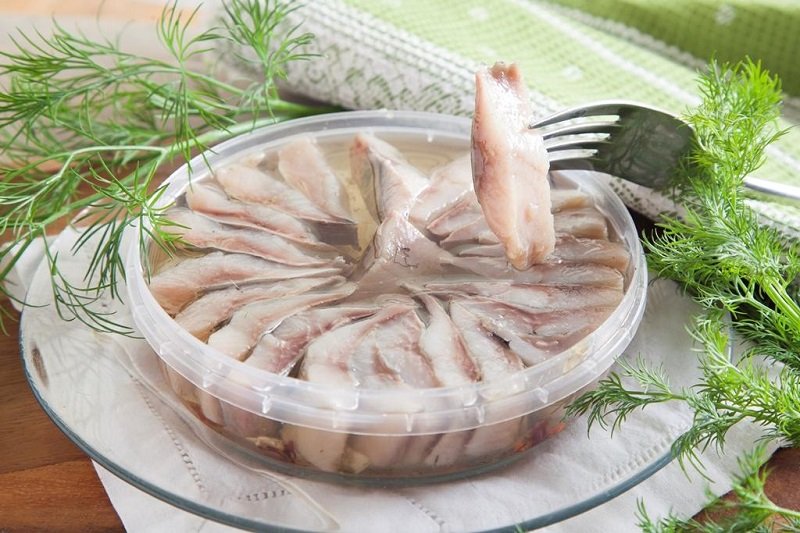
Plastic Packaging for Fish Products and Caviar
Plastic Packaging for Fish Products and Caviar: How to Choose the Perfect Container
For producers of herring, mackerel, salmon, fish preserves, and caviar, packaging is an integral part of the technological process. It must do more than just hold the product; it must protect it from oxygen, brine leakage, foreign odors, mechanical damage, and cold chain breaches. That is why plastic fish packaging is selected based on the recipe, product fat content, type of brine or oil, filling volume, and subsequent logistics.
For fish processing plants, salting shops, and filling lines, stability is paramount: consistent container geometry, predictable sealing, equipment compatibility, and regular supplies. High-quality fish product packaging helps maintain the visual appeal of products like lightly salted herring, mackerel pieces, salmon fillets, fish preserves, and delicacy caviar.
Airtightness Requirements for Salted and Marinated Fish Containers
Plastic fish packaging for products packed in marinade or brine must withstand constant contact with moisture, salt, oil, spices, and organic acids. The brine (brine solution) must not leak during movement, stacking, or transportation. For products like herring in filling, sliced mackerel, or salmon in marinade, a tight-fitting lid, smooth rim, and polymer resistance to deformation are critical.
For industrial use, the packaging must meet several practical requirements:
- Maintain airtightness during the filling process;
- Withstand handling without wall or lid deformation;
- Feature a tight-fitting lid or a tamper-evident seal;
- Maintain stability under various temperature modes;
- Be convenient for stacking, inventory management, and logistics;
- Be made from food-grade polypropylene (PP);
- Be suitable for labeling, branding, and IML labeling application.
Fish containers with lids reduce the risk of leakage, protect the product from external odors, and help maintain the correct brine concentration. A tamper-evident seal confirms that the container hasn't been opened after filling, which is crucial for retail chains, distributors, and end consumers. Food containers for herring are ideal for retail portions, while for medium and large batches, producers find it practical to buy plastic fish buckets with reliable handles and tight-fitting lids.
Special consideration should be given to temperature modes (0°C...-4°C). Under these conditions, plastic fish containers must not crack, lose shape, or lose airtightness after cooling. Therefore, it is vital for manufacturers to test packaging not just in dry form, but in the real cycle: filling, sealing, cooling, warehousing, delivery, and display.
Plastic Buckets and Containers for Caviar: Preserving the Delicacy
Caviar requires particularly delicate packaging, as it is sensitive to oxygen, temperature fluctuations, foreign odors, and mechanical stress. Grainy caviar can lose its gloss, structure, and flavor if airtightness is breached or there is excessive air contact. Thus, red caviar packaging must minimize oxidation and perform stably under chilled storage conditions.
Small containers with precise geometry, a snug lid fit, and food-grade material that doesn't interact with the product are best for packing salmon caviar. A vacuum lid or a design with minimal air access helps preserve the delicacy's color, aroma, and consistency longer. Red caviar containers must also have a neat appearance, as a premium product requires presentable shelf display.
Consistency across the entire batch is often essential for clients. When a producer plans to buy plastic fish buckets and food-grade plastic containers for caviar from a single supplier, it simplifies procurement, inventory, and documentation. Uniform packaging standards help reduce production risks and prevent filling line downtime due to inconsistent packaging.
Labeling and Certification of Food-Grade Plastic for the Fish Industry
In the fish industry, it is crucial to use materials approved for food contact. Food-grade polypropylene (PP) is ideal for salted fish, preserves, and caviar due to its resistance to moisture, fats, and saline environments. The supplier must provide a certificate of conformity (SES conclusion) so the producer can verify packaging safety during internal audits, retail chain inspections, and partner collaborations.
Container labeling helps convey the product name, ingredients, net weight, filling date, batch number, storage conditions, and manufacturer info. Within this process, container branding (IML labeling) becomes a practical solution for the fish category.
Plastic fish packaging with clear labeling facilitates batch control and builds consumer trust. For retail chains, it's vital that packaging is clear to the consumer, while for producers, it ensures food logistics remain predictable at every stage. Seafood transportation may follow similar requirements, but the key focus here is herring, mackerel, salmon, fish preserves, and caviar.
Advantages of Wholesale Packaging Procurement from Plast Mould
For fish plants and processing shops, wholesale supplies from the manufacturer are as important as the quality of the packaging itself. If packaging arrives with delays or differs from the previous batch, the enterprise may lose filling speed, face sealing line issues, or have to change warehouse storage schemes.
Plast Mould offers fish containers with lids suitable for retail packing where airtightness is key. For larger volumes, it is advisable to choose plastic buckets from the manufacturer, convenient for fish in brine, marinade, or oil. Plastic fish packaging from the manufacturer gives the business more control. In the fish industry, this is not a minor detail but the foundation of continuous production. Contact Plast Mould to select the plastic packaging for your technological process.